
A Deep-Dive into Summerville SC's Top Master-Planned Communities Amenities and Fees

A Deep-Dive into Summerville, SC's Top Master-Planned Communities Amenities and Fees
Welcome to the Lowcountry, where modern living meets historic charm! Summerville, South Carolina, is consistently one of the fastest-growing and most desirable locations in the region. This is largely due to its incredible Master-Planned Communities (MPCs), which offer more than just a home. They offer a comprehensive, amenity-rich lifestyle. But with so many fantastic options, Cane Bay Plantation, Nexton, Carnes Crossroads, and Summers Corner, how do you choose?
As a dedicated husband and wife real estate team, we spend every day in these communities, and we know that the key to making the right decision lies in understanding the specific amenities you’ll gain and, crucially, the associated fees that sustain them. In this deep-dive guide, we'll break down the lifestyle offerings and financial structures of Summerville’s top MPCs so you can find the perfect place to build your life.
The Core Value Proposition: Why MPC Fees are an Investment
When exploring master-planned communities, one of the first questions we get is about Homeowners Association (HOA) fees and Community Development District (CDD) fees. It's important to view these not as a cost, but as a shared investment that fuels and sustains the superior lifestyle and, ultimately, helps protect your property value. These fees ensure a consistent aesthetic, high-quality maintenance, and access to amenities that would cost a fortune to purchase privately.
Decoding HOA vs. CDD Fees in Summerville
It's vital to know where your money goes. Here is the distinction between the two primary fees you may encounter:
-
Homeowners Association (HOA) Fees: These are generally monthly or annual fees that cover the ongoing operation, maintenance, and programming of the community. This includes maintaining the clubhouses, pools, fitness centers, common area landscaping, and often the salary of a full-time Lifestyle Director. In Summerville MPCs, base HOA fees can range from approximately $80 to over $300 per month, depending on the size of the community and the extent of the amenities.
-
Community Development District (CDD) Fees (Also called Improvement District Fees): Some larger, newer MPCs, like Nexton, have an Improvement District fee. This fee is typically collected with your property taxes and is used to pay for the initial construction of large-scale infrastructure—things like main roads, water and sewer lines, and primary amenity buildings. Unlike some other regions, not all Summerville MPCs have a CDD fee. For those that do, it is an annual assessment that may decline over time as the bonds are paid off.
Nexton: The High-Tech, Mixed-Use Marvel
Nexton is the blueprint for the modern, connected Lowcountry community, known for its cutting-edge design and vibrant, self-contained "town center" feel.
Nexton's Signature Amenities and Connectivity
Nexton has made connectivity and walkability the pillars of its lifestyle, appealing strongly to young families and professionals.
-
GigaFi Internet: A non-negotiable for many buyers, Nexton delivers gigabit-speed fiber optic internet to every home, making remote work and seamless streaming a reality.
-
The Midtown Club & Pool: This is the jewel of Nexton’s amenities, featuring a resort-style pool with lap lanes, a state-of-the-art fitness studio, and a sophisticated gathering area. The nearby Brighton Park Swim Club adds another aquatic center with an interactive splash pad for children.
-
Walkable Town Center: Nexton Square is the community’s mixed-use hub, offering a growing collection of restaurants, shops, and essential services that are easily accessible via the extensive trail network.
-
Parks and Trails: The community is designed with a heavy emphasis on green space, boasting over 50 parks and an extensive network of paved paths and rugged trails for walking, running, biking, and golf cart travel.
Nexton Fees and Financial Considerations
Nexton’s unique structure involves both an HOA fee and an Improvement District fee to support its immense infrastructure and top-tier services.
-
HOA Fees: Base neighborhood HOA fees vary based on the home style (e.g., townhome vs. single-family) but the master HOA fee is a relatively low, ongoing cost to maintain the large common areas.
-
The Improvement District Fee (Annual): This annual payment, collected with property taxes, funds the master infrastructure and replaces a city property tax that Nexton residents (in unincorporated Berkeley County) do not pay. This structure provides a transparent way to fund large-scale community improvements.
-
Community Enhancement Fund: Nexton also includes a transfer fee (often 0.25% of the home's resale price) at closing, which is deposited into a fund for continuous community enrichment and future improvements.
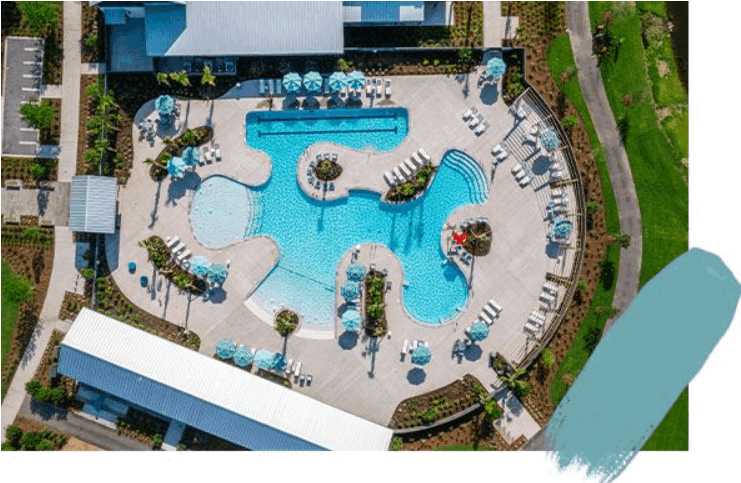 Photo credit: Nexton.com
Cane Bay Plantation: The Gigantic, Self-Sustained Community
Cane Bay Plantation is one of the largest master-planned communities in South Carolina, functioning as a fully self-contained ecosystem where residents can fulfill almost all their daily needs without leaving the development.
Cane Bay's Massive Amenity Offering
Cane Bay's scale allows for amenities that few other communities can match, making it exceptionally appealing for families.
-
Integrated Schools: A huge selling point is the presence of three Berkeley County public schools, Cane Bay Elementary, Middle, and High School,all located within the community’s boundaries, allowing children to safely walk or bike to school.
-
The Cane Bay YMCA & Library: This unique partnership provides residents with a massive 54,000-square-foot facility that includes a full fitness center, pools, sports courts, and a branch of the Berkeley County Library. This serves as the ultimate community hub.
-
Lakes and Blueway: The community features an extensive 300-acre lake system and "blueway" that offers residents a unique recreational amenity for kayaking, paddleboarding, and fishing.
-
Commercial Convenience: The community is home to a dedicated commercial center with a major grocery store (Publix), banks, medical offices, and restaurants, making errands effortless.
Cane Bay Fees and Financial Considerations
Cane Bay typically boasts one of the most straightforward fee structures in the area, offering excellent value for the level of amenity access.
-
HOA Fees: Cane Bay is known for having a generally lower master HOA fee (paid annually) compared to some other MPCs, a fact that attracts many cost-conscious buyers. However, individual neighborhood HOA fees will apply and must be considered.
-
No CDD/Improvement Fee: A key difference is that the majority of Cane Bay Plantation does not have a separate Improvement District/CDD fee assessed on the tax bill, simplifying the annual cost of ownership.
-
Sub-Community Fees (e.g., Del Webb): It's important to note that sub-communities within Cane Bay, such as the active adult Del Webb at Cane Bay, have their own higher, comprehensive monthly HOA fees that cover exclusive, age-restricted amenities and low-maintenance living.
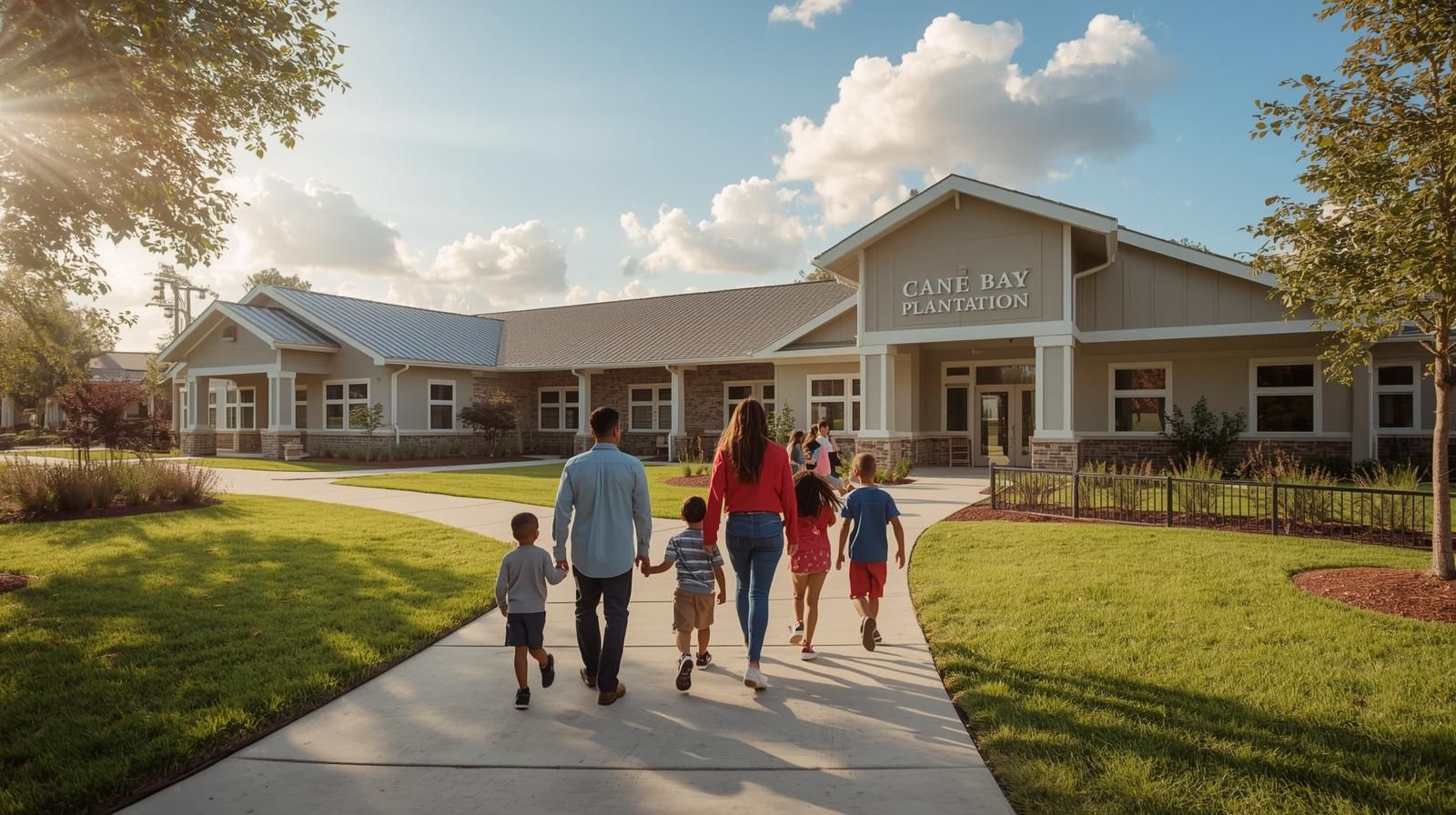
Carnes Crossroads: The Agrihood and Wellness Focus
Carnes Crossroads is known for its blend of classic Lowcountry architecture with a unique, modern emphasis on wellness, community interaction, and the "agrihood" lifestyle.
Carnes Crossroads' Unique Amenities
This community's offerings are designed to promote a healthy, social, and locally connected way of life.
-
The Agrihood: The centerpiece of this unique lifestyle is the working community farm, farm store, and You-Pick gardens, allowing residents to engage directly with sustainable, local food production.
-
The Perch and The Lakehouse: The amenity center features a spectacular resort-style pool known as "The Perch," complete with a three-story waterslide, and The Lakehouse, a multi-purpose community hub that includes a co-working space and café for residents.
-
On-Site Healthcare and Education: The community benefits from the convenience of having Roper St. Francis Berkeley Hospital and quality educational options, including both public (Carolyn Lewis School) and private (Northwood Academy) schools, directly within or adjacent to the development.
-
Connectivity and Commercial Hub: Carnes Crossroads integrates residential living with a commercial town center, making shopping, dining, and medical care all within easy reach of the neighborhoods.
Carnes Crossroads Fees and Financial Considerations
Carnes Crossroads maintains premium amenities through its HOA structure, providing a high-end experience for residents.
-
HOA Fees: Fees here are competitive with the other major MPCs, generally falling in the range to support its numerous pools, extensive landscaping, lifestyle programs, and specialized facilities like the Agrihood.
-
Focus on Lifestyle Programming: A significant portion of the HOA fee supports the full-time Lifestyle Director, who coordinates a packed calendar of events, fitness classes, and clubs, which is a major draw for socially active residents.
-
Master and Sub-HOAs: Like many MPCs, different neighborhoods within Carnes Crossroads may have slightly different fees based on their proximity to specific sub-amenities or if they are part of an age-restricted section like Horizons at Carnes Crossroads (55+).
 Photo Credit: Carnes Crossroads.com
Summers Corner: Nature's Oasis and Educational Hub
Summers Corner distinguishes itself with an intentional focus on natural preservation, stunning lake views, and a tight connection to the educational campus located within its core.
Summers Corner's Natural and Educational Amenities
This community targets buyers seeking a serene, nature-rich environment with exceptional educational resources right outside their door.
-
Buffalo Lake and Nature: The community is centered around the beautiful Buffalo Lake, offering a picturesque setting for kayaking, fishing, and peaceful walks. The design preserves natural Lowcountry topography and mature pines.
-
The Corner House & School Campus: The community amenities are clustered around a central Village Center. This includes The Corner House, a gathering space, the Pool House, and direct access to the Dorchester School District Four campus, which includes a Performing Arts Center.
-
Parks and Gardens: Numerous small, iconic neighborhood parks, pocket parks, and gardens are scattered throughout the community, enhancing the sense of intimacy and providing many spots for outdoor relaxation.
-
Walkable Village Center: The Village Center is the social and retail hub, designed to be easily walkable or bikeable from all neighborhoods, reinforcing the community’s focus on low-speed, interactive living.
Summers Corner Fees and Financial Considerations
Summers Corner offers a premium Lowcountry lifestyle with competitive fees structured to maintain its commitment to natural spaces and high-quality facilities.
-
HOA Fees: HOA fees are comparable to other top MPCs, funding the maintenance of the major amenities, extensive trail systems, and the preservation of its abundant green spaces and lakefront areas.
-
Low-Maintenance Options: Certain housing types, such as townhomes or the homes in the active adult section Horizons at Summers Corner (55+), will have higher monthly fees to cover exterior maintenance, lawn care, and exclusive clubhouse access.
-
Long-Term Value: The community’s integration of a premier school campus and preserved natural resources is a major factor that contributes to its sustained desirability and, therefore, the long-term protection of home values.
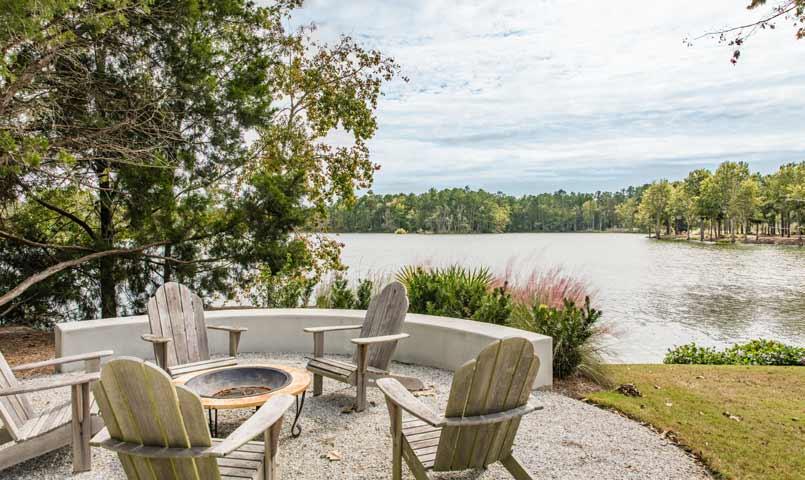 Photo Credit: DorchesterCountySC.gov
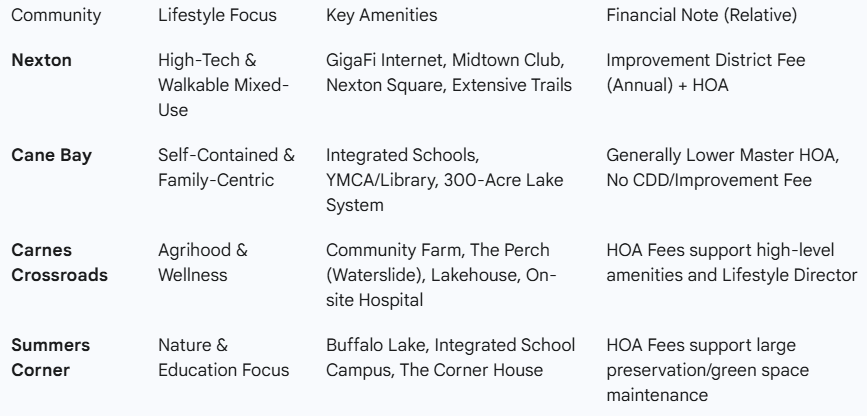
Summary of Lifestyle and Fee Comparison
Your Lowcountry Home Journey Starts with Expert Guidance
Navigating the nuances of Summerville’s master-planned communities, from comparing a CDD structure to an integrated school system, is complex. The quality of your purchase, and the value you retain, often comes down to the expertise you have at your side. We’ve specialized in these exact communities for years and possess the in-depth knowledge of builder incentives, contract details, and community specifics to ensure you make an informed decision that perfectly matches your lifestyle and financial goals. Don't leave the biggest purchase of your life to chance.
Are you ready to stop researching and start living the Summerville dream? We're here to provide you with a personalized, side-by-side analysis of the communities that best fit your budget and amenity wish list. Don't navigate the builder's contracts and complex fee structures alone. Contact us today for a private tour and your FREE custom cost-of-ownership comparison report!
See Here to See Featured Listings in Master-Planned Communities
Top 5 Questions About Buying/Selling in Summerville Master-Planned Communities
1. What is the typical tax difference between a CDD community and a non-CDD community?
-
Question: How does the annual cost of ownership in a CDD community (like Nexton) compare financially to a community without a CDD (like Cane Bay)?
-
Answer: While not a perfect comparison, a CDD/Improvement District fee generally replaces a traditional municipal property tax for residents living in unincorporated areas. Therefore, the total property tax bill plus HOA fees may be comparable to a non-CDD community with a higher HOA fee or a community within town limits paying town taxes. We always provide a detailed closing cost estimate that breaks down the full annual cost for direct comparison.
2. Do the amenities in master-planned communities ever get overcrowded?
-
Question: Given the large size of these communities, are the pools, fitness centers, and sports courts often too crowded, especially during peak seasons?
-
Answer: Developers strategically design these communities with multiple amenity centers, and as the community grows, they often expand or add new facilities, such as the new clubhouse additions in Nexton and Carnes Crossroads. While pools are busiest during the summer weekends, the sheer number of options—trails, multiple parks, and various sports courts—helps distribute the activity and minimize persistent overcrowding.
3. If we buy new construction, do we have to pay the full HOA fee even if the amenities aren't finished?
-
Question: If we purchase a home in a new phase of an MPC where the clubhouse or pool is still under construction, are we required to pay the full amenities fee?
-
Answer: Yes, typically you will begin paying the HOA fees once you close on your home, even if some large-scale amenities are still being finished. However, the initial fee structure is designed to cover essential services like common area landscaping and security from day one, and the full amenities fee is an investment toward the beautiful facilities you will soon enjoy.
4. How much negotiation power do we have on the price when buying new construction in these popular communities?
-
Question: Since these communities are so popular, is there any room for us to negotiate the final price or terms of the contract with the builder?
-
Answer: While base price negotiation can be limited, especially for standing inventory, we often secure significant value for our clients through negotiating incentives. These can include closing cost contributions, design center credits for upgrades, or appliance packages. Our experience ensures you leave nothing on the table when dealing with the builder.
5. Can the HOA fees significantly increase after we purchase the home?
-
Question: What is the likelihood that the HOA fees will see a major jump in the first few years after the community is built out?
-
Answer: Fee increases are a possibility in any community and typically occur annually to keep pace with rising maintenance and insurance costs. Major spikes are usually minimized by proper financial planning by the HOA board, but they can occur if the community votes to add a new amenity or if significant unexpected infrastructure repairs are needed. We always advise reviewing the HOA's financial disclosures before closing.
Categories
- All Blogs (98)
- Cost of Living in Summerville SC (21)
- Cost of Selling or Buying a Home (23)
- Downtown Summerville SC (6)
- Estate Planning (8)
- Freebie (2)
- Golf in Summerville SC (2)
- Guides (16)
- Job Opportunities in Summerville SC (1)
- Lifestyle and Culture (22)
- Market Trends (3)
- Nearby Areas & Comparison Guides (16)
- Neighborhoods in Summerville SC (25)
- PCSing to Charleston - Military Guidance (12)
- PCSing to Charleston SC (22)
- Property Taxes in Summerville SC (6)
- Relocation Questions & Miscellaneous Topics (37)
- Retire in Summerville SC (5)
- Schools in Summerville SC (12)
- The Inspection Files (4)
- Things to do in Summerville SC (6)
Recent Posts